
Three useful building blocks
A sequence (chow or chi) has three consecutive ranks in one suit. A triplet (pung or pon) has three identical tiles. A pair has two identical tiles. A declared quad (kong or kan) has its own replacement and declaration procedure: learn that procedure in your rules guide.
In the examples below, say the shape before looking at the next one. The dot pair is useful, but it is not a triplet yet.
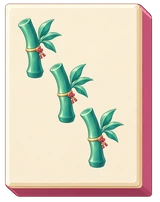
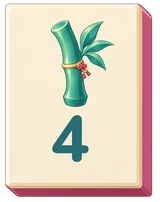
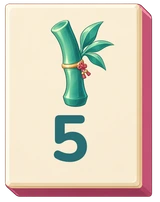
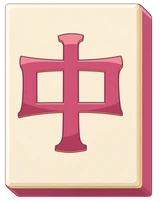
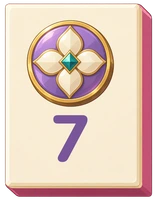
Build the picture in groups
The usual standard 14-tile shape is four sets and a pair. Taiwanese 17-tile play usually adds a fifth set. Special winning shapes are exceptions, and a declared quad changes the physical tile count. American card hands need a different reading approach.
For this teaching hand, cover one group at a time. You can account for every tile without counting the whole row repeatedly. This demonstrates shape only; qualification depends on the rules.
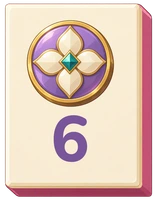
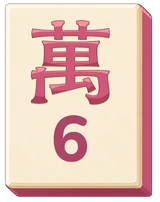
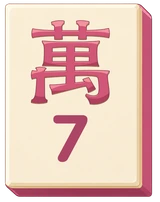
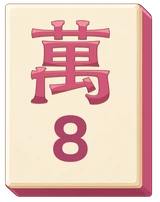
Give unfinished shapes room
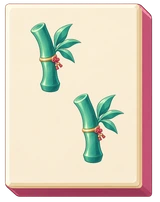
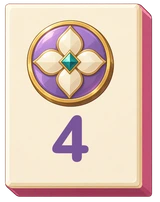
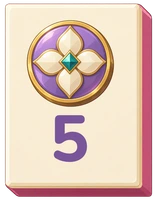
Keep a pair of neighbours together while you learn: 2–3 bamboo is easier to inspect as a small block than buried in a long rack. Moving tiles around does not commit you to a pattern. It helps you notice possibilities.
Now try the sequence exercise. It asks which rank completes a three-tile run, not whether the whole hand is ready or eligible to win.
Your turn
Complete the sequence
Which offered tile makes a three-tile sequence? More than one choice may work.
Saved in this browser. Completion is yours to mark when you feel ready.
Your first turn, without the rush →
Know what you are looking at, what you can do, and when to let the next player act.
Sources & scope
An original Hé Fēn explanation with our own teaching examples. Reference links checked 13 September 2026. We are not affiliated with these organisations.
- Riichi rules, 2025 edition European Mahjong Association. Competition rules for EMA play. Use the published edition and its annotations; other Riichi tables can differ.
- Mahjong Competition Rules World Mahjong Organization / EMA. The WMO 2006 Green Book and EMA tournament materials. Consult the event rules for tournament procedure.
- Taiwanese Classic in Hé Fēn Hé Fēn Mahjong. The Taiwanese Classic scoring table used in Hé Fēn, with options for table variations.