
Value vs speed
Eight points is the game — arithmetic before tiles
Name a route to 8 at the deal
BEGINNERReal routes with real sums: half flush (6) + a dragon or wind pong (2). Mixed triple chow (8) on its own. All pungs (6) + two concealed pungs (2). Flowers are a bonus on top of a winning hand but NEVER count toward the eight — a hand with no route is a hand you cannot win with, no matter how pretty.
Build the shared core and keep two routes alive
INTERMEDIATEThe best MCR tiles serve two fan families at once: 2-3-4 in each suit is a mixed triple chow track AND an all-chows/simples track — nine shared tiles, two destinations. Commit to one route only when the draws force you, and switch early when your main route's key tiles die. A route change at discard eight is good play; at discard sixteen it is a eulogy.


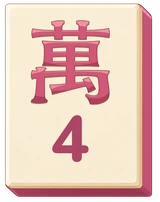
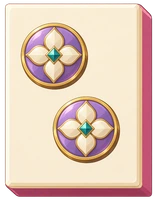
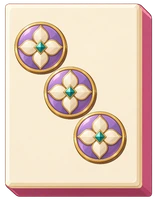
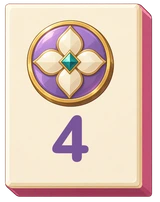
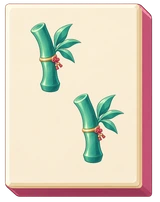
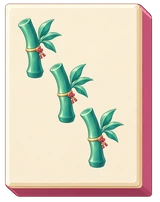
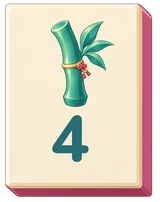
Mixed Triple Chow (8) outright — or the all-chows/simples track if a suit breaks.

Recount before you declare: points already inside a bigger pattern don’t count again
ADVANCEDA fan automatically contained in a bigger one scores nothing extra: Four Concealed Pungs already includes All Pungs and Concealed Hand; a Pure Straight consumes its component chows. Hands that "count 12" and audit to 7 are declared illegal wins — a penalty in competition. Audit before you fix the wait, while a real eighth point can still be found.

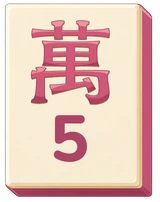
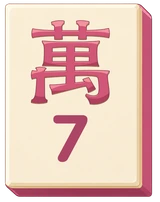
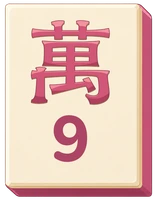
All Pungs and Concealed Hand are implied by Four Concealed Pungs.
- ✓Your sum leans on a big fan plus members of its own family
- ✓Two counted fans use the same tiles for the same idea
- ✓You are at 8-9 on paper with no margin
The wait can be your eighth point — edge, closed and single waits score 1 each
ADVANCEDStuck on 7? An airtight edge wait (1-2 needing 3), closed wait (4-6 needing 5) or single wait (pair) each add a point — but only when the win could come no other way; a second completing tile voids it. Over 8 already? Do the opposite: widen the wait and take the win probability instead.
Tile efficiency
Flexibility converts directly into fan here
Keep middles on every close call
BEGINNERA 4, 5 or 6 feeds chows, straights and the shifted families simultaneously; terminals feed one sequence each. In a ruleset where patterns pay, the connective tile is worth more than the pretty one.
Learn the workhorse fans cold
BEGINNERAll Chows, All Simples, Concealed Hand, Self-Drawn, the flush family, the straight family. The floor is usually reached by stacking three or four humble fans over shared tiles — you cannot stack what you cannot recognise at a glance.
Defensive play
Read the exposed sets and weigh the risk of your next discard
Every claim is a route commitment — price it that way
INTERMEDIATEA pung call locks those tiles into one interpretation and kills the concealed fans. Claim when it completes a fan on your counted route to 8; pass when the tile might serve a richer shape two draws later. The claim that "just advances the hand" is usually the claim that strands it at six points.
Three exposed melds sketch the whole hand — withhold the finisher
ADVANCEDSuit, pungs-or-chows character, and a rough fan count are all visible in three melds. Late in the hand, hold back the tile class that completes THAT story — especially against exposures already worth eight twice over.
Advice and evidence
A strategic suggestion depends on your hand, opponents and scoring sheet. Older simulation summaries do not establish an optimal action. Our latest matched-deal batch reports uncertainty and includes inconclusive results.
Compare strategy across rulesets →
The same shape can lead to a different decision under a different scoring system.